

The government’s plan to extend the Rironi–Mau Summit dual carriageway to Malaba at the Kenya–Uganda border has gained momentum after Kenya secured financing from the Asian Infrastructure Investment Bank (AIIB) to prepare the project.
A notice from the Kenya National Highways Authority (KeNHA) shows the state will hire consultancy firms to carry out a technical feasibility study for the planned capacity upgrade of the Mau Summit–Eldoret–Malaba (A8) Road. This step points to the next phase of improvements along one of East Africa’s busiest transport routes.
The work supports a wider effort to modernize the Northern Corridor into a high-capacity highway that links the Port of Mombasa with regional partners, including Uganda, Rwanda, South Sudan, and the DR Congo.
KeNHA reports that the government received AIIB financing for project preparation and plans to use part of the funds to contract consultants for the feasibility study.
“The Government of the Republic of Kenya, through the Kenya National Highways Authority (KeNHA), has received financing from the Asian Infrastructure Investment Bank toward the cost of the preparation of the project,” the tender notice says.
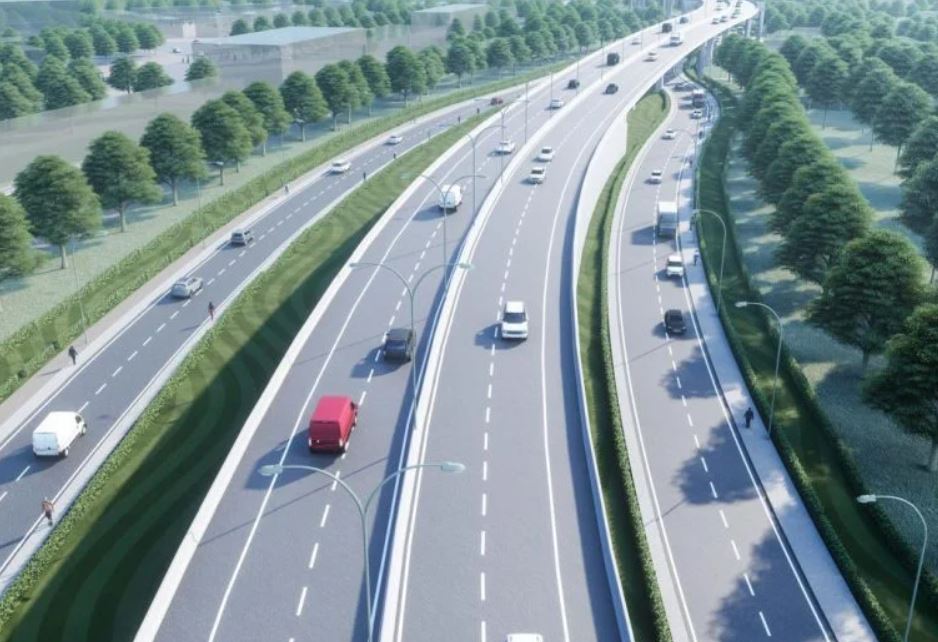
The feasibility study will examine how to increase capacity on the roughly 245-kilometer Mau Summit–Eldoret–Malaba road section using a Public-Private Partnership (PPP) model.
The latest development follows increasing progress on the Rironi–Mau Summit Expressway as the government targets a long-term fix for congestion along the busy Nairobi–Nakuru–Eldoret–Malaba route.
Transport stakeholders have long pointed to this corridor as a key obstacle to trade and the movement of goods across the East African region.
The planned study will assess the project’s technical, environmental, social, economic, and financial dimensions.
Consultants will also prepare procurement documents and advise the government on how to structure the project to enable private sector participation.
KeNHA said the assignment should run for about 12 months and will include engineering investigations, traffic studies, topographical surveys, climate risk assessments, and environmental impact analyses.
The authority will select firms with proven experience in major toll-road developments, PPP transactions, and infrastructure projects financed by multilateral development banks.
The tender document requires consultants to show that they advised on at least two toll-road or expressway PPP projects within the past 15 years.
The planned expansion should improve travel for both cargo and passengers between Kenya and Uganda. It should also cut travel times and lower transport costs for businesses that operate along the corridor.
The Northern Corridor carries most of the cargo that enters the region through the Port of Mombasa, which makes it one of East Africa’s most critical transport routes.
By extending the upgrade from Mau Summit to Eldoret and eventually to Malaba, the government aims to build a continuous, high-capacity link from Nairobi to the border.
Under the PPP approach, private investors would contribute to financing, construction, and operation of highway sections, potentially through tolling arrangements.
KeNHA’s tender documents state that interested firms should submit expressions of interest by June 23, 2026.
The consultancy study will map out how to implement the project, including setting cost estimates, projecting traffic volumes, identifying financing options, and choosing the most suitable procurement structure.
The post Mau Summit-Malaba Highway Upgrade Takes Shape as Kenya Secures Major Funding Boost appeared first on Bossnana.


