
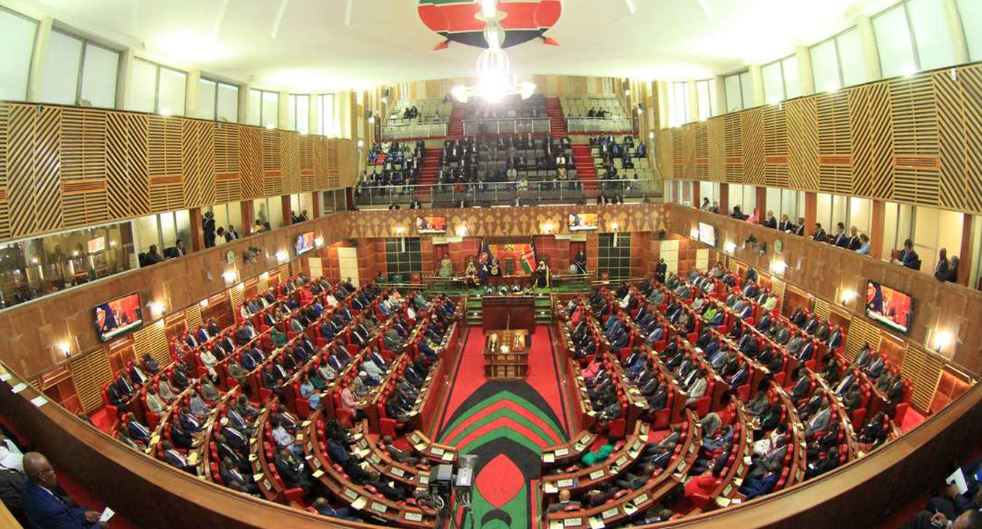
 Parliament has moved to reassure millions of Savings and Credit Cooperative Organization (SACCO) members that their savings remain safe, rejecting claims circulating on social media that the government plans to access more than Sh1 trillion held by cooperatives to fund the proposed National Infrastructure Fund.
The intervention comes amid rising public concern over the proposed Sacco Societies (Amendment) Bill, 2025. Online misinformation has alleged that the legislation would give the government sweeping powers over members’ deposits and the governance of cooperative societies.
In a detailed clarification, the National Assembly urged Kenyans to “beware of misinformation” and explained what the Bill does and does not provide.
No fast-tracking, Parliament says
Parliament also dismissed allegations that lawmakers pushed the measure through quickly. It said the Bill was published on June 30, 2025, more than a year ago, and remains before the National Assembly’s Departmental Committee on Trade, Industry and Cooperatives, where it is undergoing public participation.
The House added that once the public participation phase ends, the committee will prepare a report and consider amendments based on submissions from stakeholders before returning the Bill to the House for debate.
If the Bill passes the National Assembly, it will still move to the Senate because it affects county governments. Only after that process can it be considered for presidential assent.
Parliament said the Bill’s main goal is to strengthen the cooperative sector by tightening regulation, improving financial stability and protecting members’ savings.
Among the proposals, the National Assembly said the measure aims to lower operating costs for smaller Saccos. It also calls for certain cooperatives to meet liquidity requirements overseen by the Central Bank of Kenya and for tighter supervision by the Sacco Societies Regulatory Authority (SASRA).
The Bill additionally targets fraudulent pyramid schemes that disguise themselves as cooperatives while promoting innovation and financial inclusion through technology.
No “super SACCO” takeover
Parliament addressed another major claim spreading online: that the Bill would create a government-controlled “super SACCO” through which members’ funds could be accessed. It said that allegation is false.
Instead, the bill proposes setting up a secondary Sacco society with membership restricted to primary Saccos. Parliament said the arrangement is meant to provide shared payment infrastructure, offer investment opportunities, and make it easier to disburse funds for member Saccos.
The House also stressed that the bill does not allow the president or the government to appoint management committees for Saccos. It said members of each individual cooperative society will continue to elect management committees as they do under the current system.
Parliament at the same time rejected claims that the government would gain powers to alter or reject management committees or interfere with the internal governance of Saccos. The National Assembly also dismissed allegations that the proposed secondary Sacco could lend money to the government or private individuals.
“There is no such provision in the Bill,” Parliament said, adding that the proposed entity would instead be prohibited from lending directly to natural persons.
Savings and compensation claims also false
Lawmakers also addressed other viral claims, including allegations that members would lose access to their savings upon resigning from a Sacco and that deposit compensation would cap at Sh100,000 if a Sacco collapses. Parliament clarified that neither claim appears in the Bill. Instead, the proposed law seeks to strengthen depositor protection by enabling members to claim reimbursements if a Sacco loses its license.
The House further clarified that the Bill does not give the proposed secondary Sacco the authority to determine liquidity requirements for other cooperative societies. SASRA will continue to prescribe those requirements, which remain subject to the Central Bank of Kenya Act governing statutory liquidity reserves.
These clarifications come amid heightened public interest in reforms targeting Kenya’s cooperative movement following the introduction of the Kenya Cooperatives Bill, which the government hopes will modernize the sector.
As one of the largest cooperative movements in Africa, Kenya’s Sacco sector mobilizes trillions of shillings in member savings, plays a critical role in providing affordable credit, promotes financial inclusion, and supports millions of households and businesses.
The government maintains that these ongoing legislative reforms aim to strengthen governance, improve financial stability, and enhance the protection of members’ deposits, rather than give the state access to cooperative funds.
The post Fact Check: Parliament Explains What the New Sacco Bill Really Means for Your Money appeared first on Bossnana.


