
 Safaricom has announced an ambitious plan to expand internet access in Kenya through fixed broadband, tokenized Wi-Fi, and prepaid fibre, aiming to unlock millions of new users in the country’s growing digital economy.
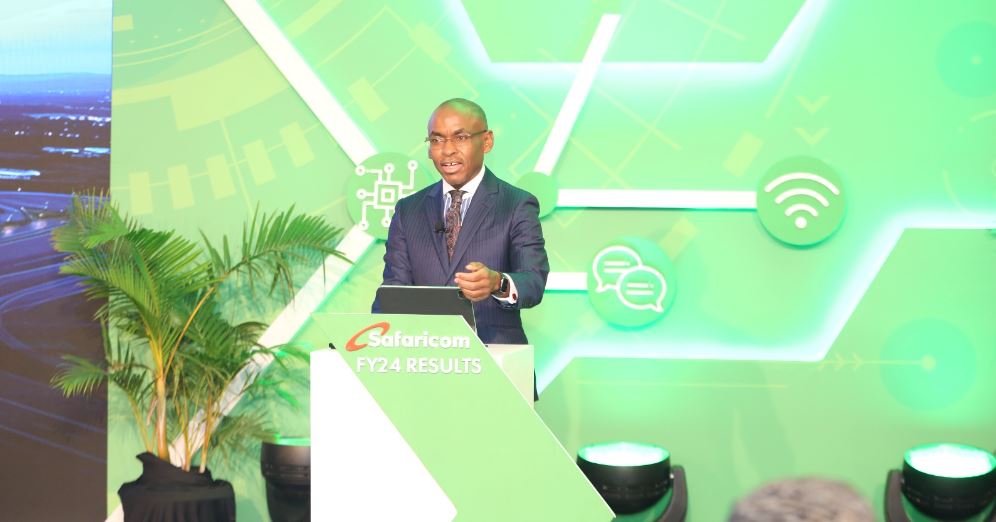
Speaking on the company’s growth strategy, Safaricom CEO Peter Ndegwa highlighted the use of flexible pricing models and innovative technologies to reach underserved markets in both Kenya and Ethiopia.
Massive Broadband Growth Opportunity
According to Ndegwa, broadband represents Safaricom’s single largest opportunity, with the potential to grow the market by millions of users over the next five years. He noted that only about 1.2 million Kenyans currently have access to fixed broadband, despite a potential market of roughly four million users.
“Today, the market is only serving 1.2 million, so there’s still another 3 million to be served. So this area can grow 50 percent every year for the next five years without exhausting the opportunity,” said Ndegwa.
The CEO’s announcement underscores Safaricom’s commitment to bridging Kenya’s digital divide, leveraging solutions like tokenized Wi-Fi and prepaid fibre to make internet access more affordable and accessible. This move aligns with Kenya’s broader goal of establishing itself as a regional technology hub, where reliable high-speed internet is increasingly critical for businesses and households alike.
Innovative Pricing and Infrastructure Expansion
To achieve this growth, Safaricom plans to expand its fibre network, deploy fixed wireless access using 5G technology, and introduce more affordable devices.
The company is also transforming how customers pay for internet services, offering tokenized Wi-Fi and pay-as-you-go fibre options.
“Instead of having plans that are monthly plans, you can have daily, hourly, weekly, or monthly. By changing the way we go to market, identifying locations based on customer needs, and tiering pricing, we can deliver solutions that expand participation and reduce costs, allowing us to reach the extra 3 million users,” Ndegwa explained.
Enterprise Solutions Targeting SMEs
Safaricom’s growth strategy also focuses on small and medium-sized enterprises (SMEs), providing integrated, end-to-end solutions that combine secure fixed connectivity with ICT, Internet of Things (IoT), and digital services.
“For small businesses, we provide tech solutions that allow them to operate more efficiently. Our aim is to integrate services so that customers, whether individuals or businesses, don’t just see Safaricom as a provider of products—they see us delivering value, fulfilling business needs, and empowering users,” Ndegwa said.
Safaricom plans to deepen its role as the public sector’s preferred digitization partner by making government services more accessible through digital platforms in healthcare, agriculture, and financial services.
Ndegwa highlighted digital identity as a key long-term opportunity, noting that digital IDs could simplify service delivery, enabling citizens to access services efficiently without unnecessary delays.
Through infrastructure expansion, flexible pricing, enterprise solutions, and public sector partnerships, Safaricom aims to significantly increase internet penetration and adoption of digital services across Kenya.
The post Tokenized Wi-Fi and Pay-As-You-Go Fibre: Safaricom’s Next Big Move for Kenyan Internet Users appeared first on Bossnana.


