
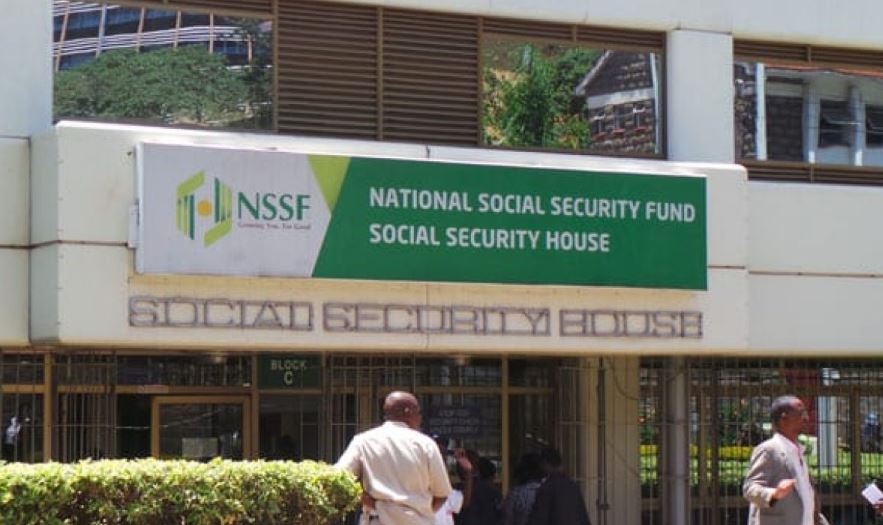
 Kenyan employees should brace for noticeable changes on their February 2026 pay slips as the fourth phase of National Social Security Fund (NSSF) reforms takes effect, substantially increasing mandatory pension contributions.
Currently, workers contribute 6 percent of their pensionable pay, with employers matching the same amount, effectively doubling monthly retirement savings through this joint contribution model.
While the 6 percent rate remains unchanged, the reforms expand the earnings base subject to deductions, allowing employees to accumulate significantly larger retirement nest eggs over time.
Two-Tier System Raises Contribution Caps Again
The NSSF Act introduced a two-tier system, separating mandatory basic pension savings (Tier I) from higher-value contributions (Tier II). Employees may also contract out portions of Tier II contributions with Retirement Benefits Authority (RBA) approval.
Earnings limits for both tiers have been raised annually since 2023, widening the contribution base and increasing retirement savings for more income levels.
From February 2026, Tier I’s earnings cap will increase to Ksh9,000, while Tier II jumps to Ksh108,000, marking the fourth consecutive year of higher thresholds under the reformed pension framework.
How the New Limits Affect Your Paycheck
Under the new thresholds, Tier I will attract a 6 percent deduction of Ksh540 per month, while Tier II applies to earnings above the Tier I cap, up to Ksh108,000.
For instance, an employee earning Ksh100,000 monthly will contribute Ksh540 to Tier I, and Ksh5,460 to Tier II, totaling Ksh6,000 in monthly deductions, up from Ksh4,320, representing a Ksh1,680 increase.
When employers match contributions, total monthly retirement savings for such an employee will reach Ksh12,000, boosting long-term financial security while slightly reducing immediate take-home pay.
Top Earners Face Steepest Deductions
Higher-income employees will feel the reforms more sharply. Those earning Ksh200,000 or more will hit the Tier II ceiling, with Tier I contributions fixed at Ksh540 and Tier II calculated on Ksh99,000, resulting in a Ksh5,940 deduction.
This brings the total monthly contribution to Ksh6,480, and when matched by employers, total remittances to the Fund reach Ksh12,960 for top earners.
Who Escapes the 2026 Bite?
Employees earning below Ksh50,000 will not see any changes, while those above Ksh75,000 will experience higher deductions impacting their monthly budgets.
For top earners, the effective reduction in take-home pay is around Ksh1,512, partially offset by the fact that NSSF contributions are tax-deductible.
Private Pension Schemes Can Cushion the Impact
Workers enrolled in approved private pension schemes may limit the impact of higher deductions. Employers can, with RBA approval, reduce contributions to occupational schemes and redirect the funds to NSSF, minimizing the effect on disposable income.
The accelerated contributions have strengthened NSSF’s financial standing, with total assets reaching Ksh558 billion by June 2025 and projected annual inflows exceeding Ksh100 billion after 2026 reforms fully take effect.
However, these pension reforms come at a challenging time for many Kenyans, as shrinking disposable incomes, stricter remittance deadlines, and penalties for late contributions put additional pressure on both employees and employers.
The post How NSSF 2026 Changes Will Affect Your Take-Home Pay appeared first on Bossnana.


