
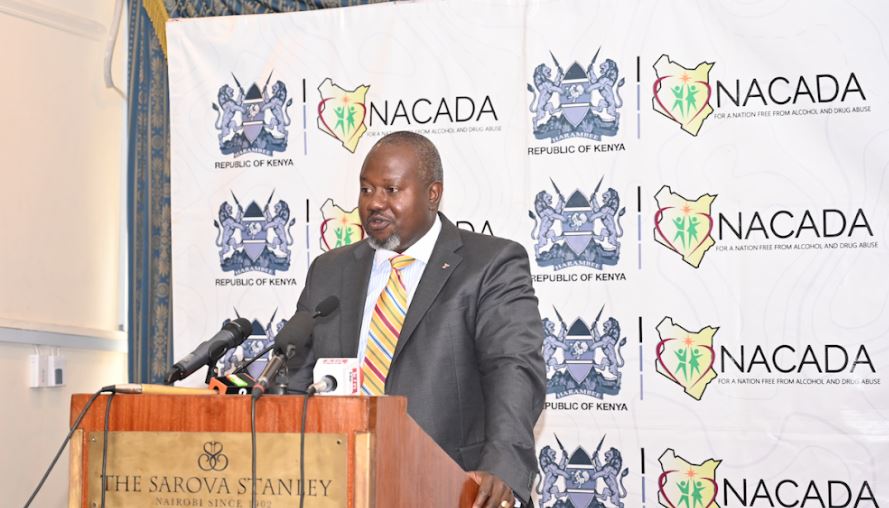
 The National Authority for the Campaign Against Alcohol and Drug Abuse (NACADA) has raised alarm about a disturbing shift in drug use patterns, warning that the country is no longer a transit but rapidly becoming a destination point for use of artificial drugs – a growing threat to national security and public health.
Speaking to the 32nd Meeting of Heads of National Drug Law Enforcement Agencies (HONLEA) in Vienna, Austria, NACADA Chief Executive Officer, Dr. Anthony Omerikwa, said that the world is witnessing a dangerous transition from traditional narcotics to extremely potent synthetic drugs.
“Current trends indicate a global rise in the abuse of illicit drugs. There is a steady shift from traditional substances to synthetic drugs, thereby increasing the number of new psychoactive substances with their adverse social and health consequences,” Dr. Omerikwa told delegates.
The HONLEA session, hosted by the United Nations Office on Drugs and Crime (UNODC), has brought together global enforcement leaders to share information, formulate strategies, and coordinate responses to the escalating drug scenario. The current summit is addressing issues such as synthetic opioids, new modes of trafficking, and the rapid transformation of transnational criminal groups.
Dr. Omerikwa noted that Kenya’s strong global connectivity, while beneficial for trade, has also made the country an attractive route for drug traffickers. However, he warned that the nation now faces a far more alarming domestic problem.
“Some African countries are no longer just transit routes,” he said. “There is an increasing availability of drugs for local use and rising domestic consumption.”
In order to stem the crisis, Kenya has adopted a multi-faceted approach that goes beyond raids and seizures of hard drugs like heroin, cocaine, and methamphetamine. The state is strengthening intelligence sharing, tightening border control, and investing in evidence-based surveillance through a National Drug Observatory that tracks emerging trends and feeds into preventive action.
Dr. Omerikwa revealed that Kenya is also at the forefront in a health-based approach to addressing drug-related crime through Alternatives to Incarceration, a policy that encourages treatment and rehabilitation rather than imprisonment.
“Diversions are accorded to persons using drugs, thereby encouraging them to seek rehabilitation and reintegration as opposed to incarceration,” he explained, emphasizing that this aligns with Kenya’s efforts to achieve the Sustainable Development Goals (SDGs).
He further called on international partners to protect young people from exposure to highly addictive new drugs and cease stigmatizing users who seek treatment.
At the same time, Dr. Omerikwa urged the international community to address new and advanced challenges such as drug trafficking over the internet, speed-parcel courier networks, and growing commercialization of cannabis for non-medical purposes.
The HONLEA conference aims at intensifying regional collaboration between drug law enforcement officials, promoting rights-based and evidence-based policy, and refining modern frameworks for addressing new patterns of the global drug trade.
The post NACADA Sounds Alarm Over Rise of Synthetic Drug Use Among Kenya’s Youth appeared first on Bossnana.


