
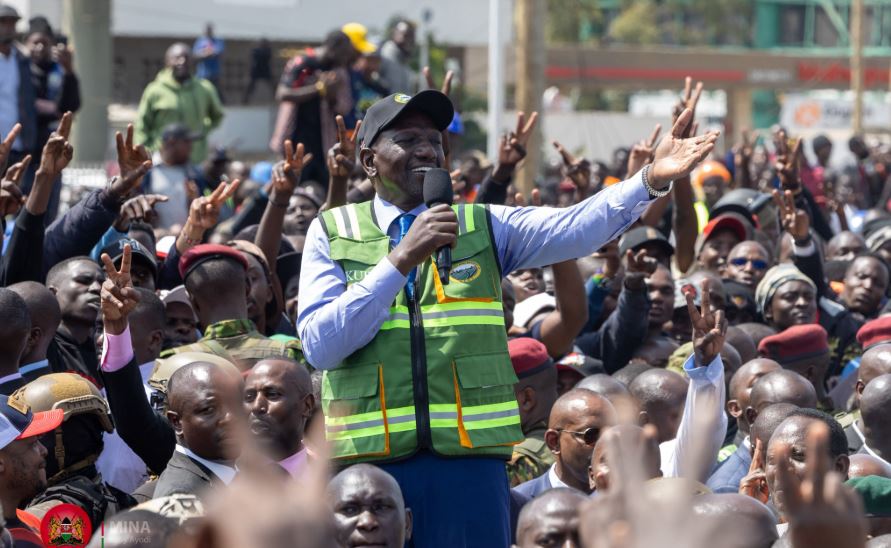
 President William Ruto announced on Monday, June 29, his government’s commitment to implementing the Nairobi Intelligent Transport System to transform urban mobility. He explained that while building roads and flyovers systematically removes the bottlenecks choking Nairobi’s traffic, modern twenty-first-century cities must move intelligently.
To achieve this, the government is rolling out a Ksh44.9 billion initiative divided into three strategic phases.
“The first phase, covering 25 signalized junctions and a modern traffic management center, is valued at $61 million (Ksh7.9 billion) and is already under construction,” Ruto revealed.
The president stated that the second phase will invest $100 million (Ksh 13 billion) to expand the system to 60 additional junctions. Following this, the third phase will inject $183.9 million (KSh 24 billion) to extend intelligent traffic management to another 125 junctions.
“Upon completion, more than 210 junctions across Nairobi will operate through a coordinated, real-time traffic management system that optimizes traffic flow, improves road safety, and significantly reduces travel time,” he added.
President Ruto also confirmed that construction of the KSh3 billion Upper Hill–Kenyatta Avenue fire duct has hit the 60 percent mark.
“Once finished, it will significantly improve access into the central business district and ease congestion across one of the city’s busiest commercial zones,” he said.
In tandem with these gridlock-busting efforts, the government has launched a KSh1.6 billion upgrade of State House Road and is building KSh3.9 billion worth of access roads to Talanta Sports City Stadium ahead of the Africa Cup of Nations (AFCON).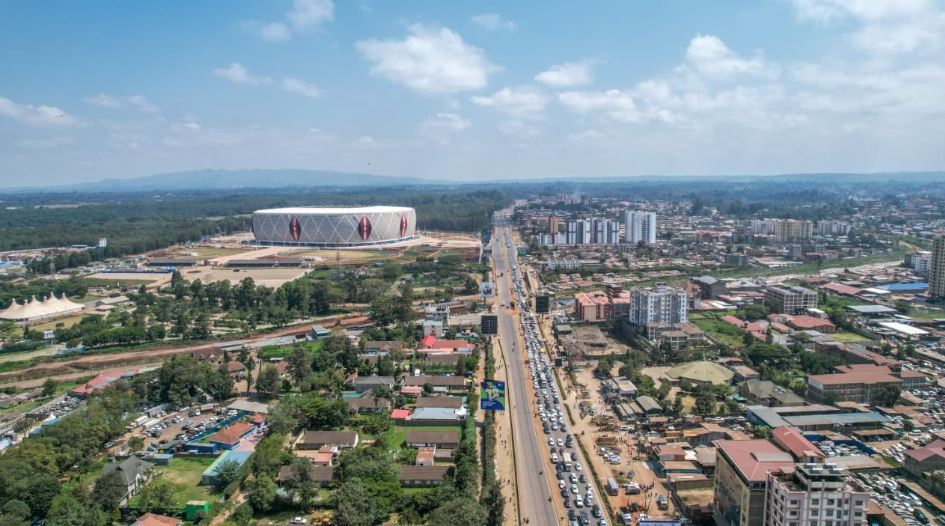
The capital’s outer arteries are also getting an overhaul, with plans underway to dual the 23.5-kilometer Kiambu Road corridor from Muthaiga to Kiambu, alongside its bypasses, via a $221 million (KSh 30 billion) investment.
“Together, these projects are systematically removing the transport bottlenecks that have restrained the growth of our capital city for decades,” Ruto said.
Turning his attention to the wider city, President Ruto noted that the Nairobi Urban Regeneration Programme currently has 729 kilometers of urban roads under routine maintenance. He also disclosed a Ksh2 billion allocation to tackle Nairobi’s drainage challenges ahead of the predicted El Niño rainfall. He explained that a targeted drainage improvement program will deploy these funds to mitigate flooding, safeguarding homes, businesses, and critical infrastructure during heavy downpours.
Ruto Opens Sh3.8 Billion Ngong Road Flyover
The president shared these updates during the commissioning of the highly anticipated KSh3.8 billion Ngong Road–Naivasha Road flyover near Junction Mall. Built by the Kenya Urban Roads Authority (KURA) and funded through the Spanish Corporate International Fund, construction on the 255-meter, four-lane structure began on September 16, 2024.
The project aims to immediately ease gridlock, bridge communities, slash travel times, and smooth out transit across the city. Ruto underscored how heavily traffic congestion penalizes workers, businesses, and families by driving up costs and draining productive hours.
“Every great city reaches a moment when its ambition begins to outgrow its infrastructure. Nairobi reached that moment many years ago. For too long, congestion has imposed a high cost on our economy and on the daily lives of our people. Congestion is not merely a transport challenge; it is an economic challenge. Every hour lost in traffic is an hour of productivity forfeited, income delayed, and opportunity diminished,” Ruto said.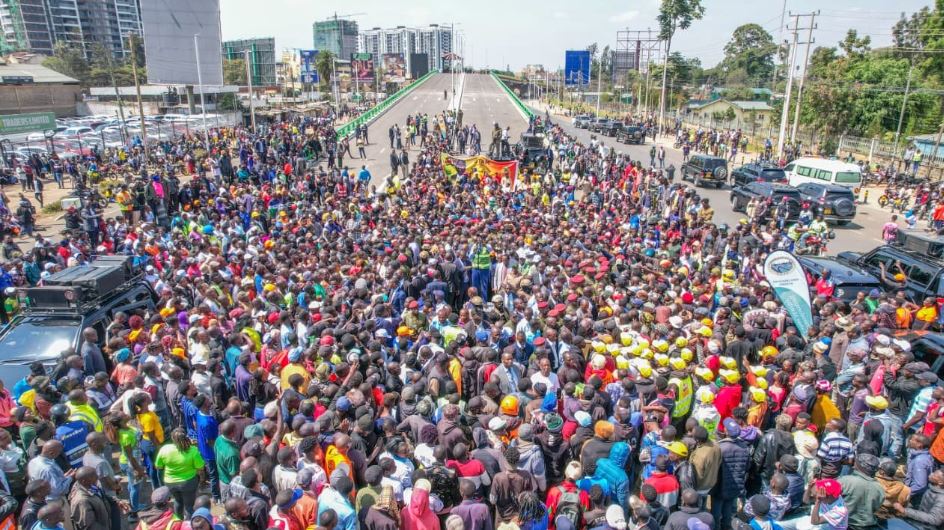
He framed the new flyover as a strategic investment to unlock Nairobi’s gridlock.
“This Sh3.8 billion project removes one of Nairobi’s most persistent traffic bottlenecks by separating traffic, improving safety for motorists, pedestrians, and cyclists alike, and restoring the strong movement of people and the smooth movement of goods along one of the city’s most important transport corridors and busiest corridors,” he said.
Modern infrastructure, he added, must cut travel times, trim transport costs, boost road safety, and help cities function more efficiently. Beyond vehicle lanes, the flyover introduces upgraded junctions, dedicated walkways, and cycling lanes to protect all commuters. The design also incorporates advanced drainage systems to minimize flooding risks during the rainy seasons, alongside landscaping to beautify the city’s face.
KURA expects the project to elevate daily mobility and build a more liveable urban landscape once it fully opens to the public.
“Every detail matters. As the Ngong Road Flyover receives its final touches ahead of its official commissioning, it showcases precision engineering, innovation & aesthetic appeal, creating infrastructure that improves mobility and enhances the city’s skyline,” the authority said.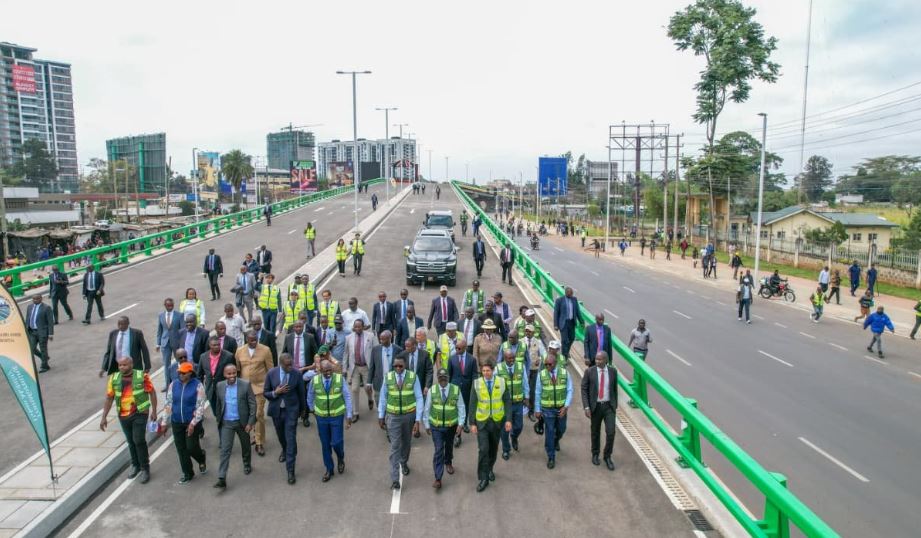
The post Ruto Confirms KSh44.9 Billion Plan to Make Nairobi’s Traffic “Intelligent” appeared first on Bossnana.


