
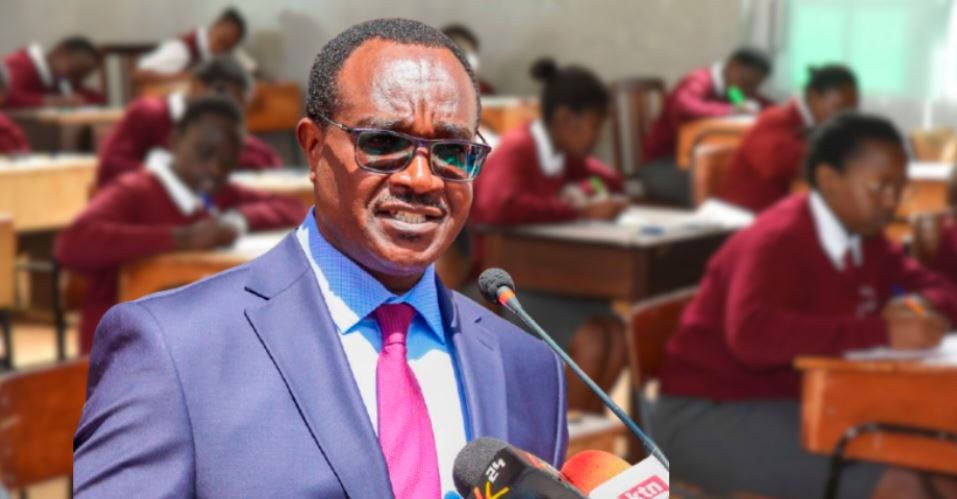
 The government has ordered all public schools to shift to green energy as part of an ambitious programme. The initiative will be financed through loans from Kenya Commercial Bank (KCB).
In a circular dated June 6, the Ministry of Education shared guidelines for carrying out the National Basic Institutions’ Solarization Program.
The circular, signed by immediate former Basic Education PS Julius Bitok, was sent to all Regional Directors of Education, County Directors of Education, and Sub-County Directors of Education.
“This circular provides mandatory guidelines for implementation. All regional, county and subcounty directors of education are required to disseminate these guidelines to all targeted schools within their jurisdiction and to ensure strict compliance with the process outlined herein,” it states.
The ministry says the programme supports its broader effort to green basic education institutions, which it has made a core part of its climate action and sustainability agenda.
Jogoo House added that, through the National Tree Planting Campaigns, schools help mobilize the planting of millions of trees each year. It noted that educational institutions therefore contribute significantly to Kenya’s target of planting 15 billion trees by 2032.
“Notwithstanding, the same institutions remain among the highest consumers of firewood for cooking and energy. This contradiction has given rise to the School Clean Energy Programme. The programme aligns with the President’s School LPG Initiative and aims to transition public schools from biomass-based energy to cleaner, safer, and more sustainable energy sources,” the circular states.
The state says installing solar power systems will reduce public schools’ dependence on grid electricity and fossil fuels. It adds that the change will lower power-related costs while protecting the environment.
To help cover installation expenses, the circular says KCB will work with the Ministry by paying service providers directly. It also states that loan servicing will run at a negotiated interest rate of 9.75% per year. The repayment will come from savings generated through the programme, the Maintenance and Improvement Fund (M&IF), or other approved infrastructure funds. The repayment period should not exceed five years.
The ministry directed education chiefs to share the circular with all public school principals in their areas within seven working days. It also required them to ensure strict compliance with all provisions and to report any implementation challenges to the principal secretary’s office within fourteen days.
Schools are expected to install one or more clean energy systems based on their assessed energy needs. These include Solar PV systems (grid-tied, off-grid, or hybrid), biogas systems, liquefied petroleum gas (LPG) systems, steam generators or thermal systems, and hybrid combinations using two or more energy sources.
“Schools are advised to transition to clean energy and to seek KCB financing at 9.75% per annum where required, subject to Ministry approval. The scope of works for each school shall include both lighting and kitchen energy systems as appropriate.”
Schools have also been directed to compile baseline data to guide the requirements for their installations and then forward the data to the appointed consultant.
The required information includes current electricity bills and details of grid supply status, a complete inventory of electrical equipment (including lighting, kitchens, laboratories, and offices), roof area, the age of the structure, the type of roofing material, and Board of Management meeting minutes confirming support for the programme.
The government says an appointed joint venture consultant, Open Door Creative & Promotion Solutions Ltd / W.S Energy Ltd, will handle all technical assessments at each school.
It also requires that the consultant’s outputs be submitted to the Ministry through the programme’s digital monitoring platform. The Ministry’s Contract Implementation Team and the Ministry of Public Works will review and approve the Bill of Quantities (BoQ) before the Ministry releases it to contractors.
Schools will then be required to run a mini-competition at the county level. They should invite Requests for Quotation (RFQs) from firms listed on the approved contractor framework for that county.
After the mini-competition, the school, represented by its Board of Management, must sign a formal contract with the selected contractor.
The circular says the contract must reference the approved BoQ and design specifications. It must also include warranty obligations and a commissioning clause requiring sign-off by the consultant and a licensed EPRA technician. The contract should state that payments will run exclusively through the KCB financing mechanism and it should bar schools from making upfront cash payments to the contractor.
“Prior to commencement of any installation works, the school and KCB must align on and formalise the financing arrangement,” the circular states.
It adds, “KCB Bank will maintain the central programme performance dashboard, giving the Ministry and KCB real-time visibility into programme progress, energy yield, system health, and financial performance across all 1,607 schools under LOT 1.”
The post How Public Schools Will Switch to Green Energy Under a New Government Directive appeared first on Bossnana.


