
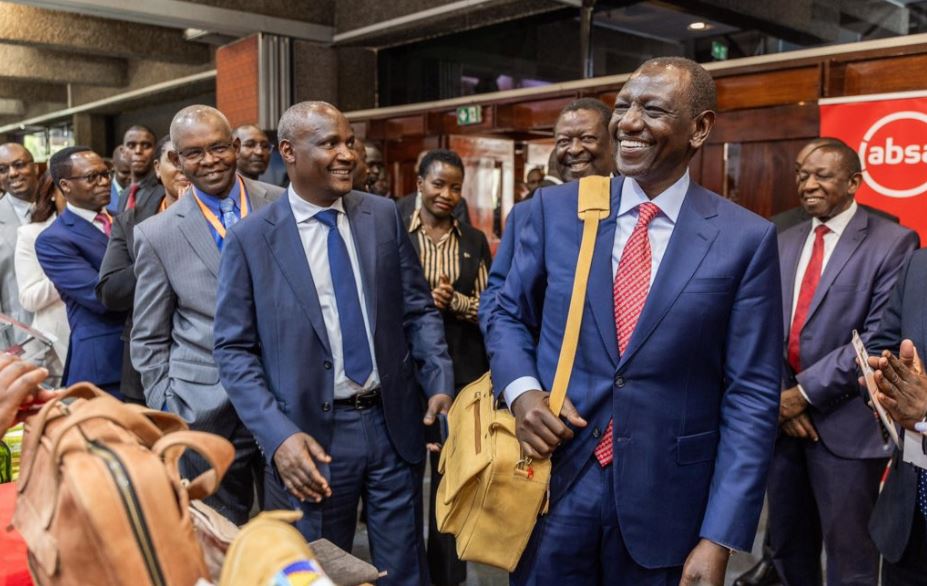
 Treasury Cabinet Secretary John Mbadi clarified why the government might struggle to eliminate taxes for Kenyans earning up to Ksh30,000 or reduce the overall Pay-As-You-Earn (PAYE) burden.
During an address on Monday, May 11, the CS noted that fulfilling these promises would immediately create a Ksh30 billion deficit in the national budget.
“We have not dropped the issue of PAYE. What my team is currently doing is running simulations. The initial simulation shows we could lose about Ksh 35 billion in revenue annually, so we are reviewing the broader economic situation. We are looking at the economic situation as it is and the impact of the personal income tax reforms we have carried out at the Kenya Revenue Authority,” the CS stated.
To bridge this gap, the Treasury plans to focus on personal and rental income taxes to bolster revenue. By increasing collections in these specific areas, the government hopes to eventually find the financial flexibility needed to lower PAYE rates.
“If the reforms bear fruit, we will collect much more from personal income tax, which will compensate for this. The other area is the rental income tax. Those are the things we are working on, but that will not stop us from implementing or actualizing the proposal that we announced publicly,” the CS stated.
While the immediate fiscal reality poses a challenge, the administration remains committed to pursuing these reforms to provide long-term relief to taxpayers.
“Before the public participation process ends, we will make a decision. Before June 30 and before the Finance Bill is passed, the government is likely to propose amendments to align PAYE with our earlier proposal to increase the tax-free income threshold from KSh 24,000 to KSh 30,000 per month. So the proposal is still on the table.”
CS Mbadi revealed that rampant tax evasion by high-income earners forces the government to maintain a heavy tax burden on those with lower salaries. To address this imbalance, the Kenya Revenue Authority (KRA) seeks legal access to financial records to identify billionaires who underpay or ignore their tax obligations.
“We would have even reduced PAYE so that people pay less, but because we have people who earn money but do not want to pay taxes, taxpayers bear a lot of the burden,” the CS explained.
The Treasury chief encouraged the public to support the push for data access, assuring Kenyans that the government will limit its reach strictly to financial information. He clarified that the KRA intends to tax only earned income, rather than every transaction passing through mobile wallets or bank accounts.
“If I have a bank account which has huge transactions that cannot be explained, can I pay taxes on it at the very least? KRA should get the data and ask me if it is my income,” he noted.
Under this proposed system, individuals would have the opportunity to justify large transfers that do not constitute earnings. The CS added, “It is for me to explain, for example, that the money has been sent to me by my aunt, or boyfriend, or girlfriend, and it is not income.”
By targeting unexplained wealth, the administration hopes to create a fairer system where the wealthy pay their share, eventually easing the pressure on the general workforce.
The Treasury minister addressed growing public concern by clarifying that the government will not target money held in M-Pesa accounts. He distinguished between regular financial activity and taxable earnings, reassuring users that the platform primarily facilitates the movement of money rather than the generation of income.
“M-Pesa is not an income; it is a transfer of funds. Nobody will come for that,” he stated.
Mbadi argued that financial data essentially constitutes a public record and maintained that the KRA should have the authority to access it. He suggested that resistance to this transparency often comes from those involved in illicit activities.
Specifically, he claimed that individuals opposing the access of financial data are money launderers seeking to avoid questions regarding the true origins of their wealth.
The post Mbadi Explains Why Govt Cannot Yet Scrap PAYE for Low Earners appeared first on Bossnana.


