
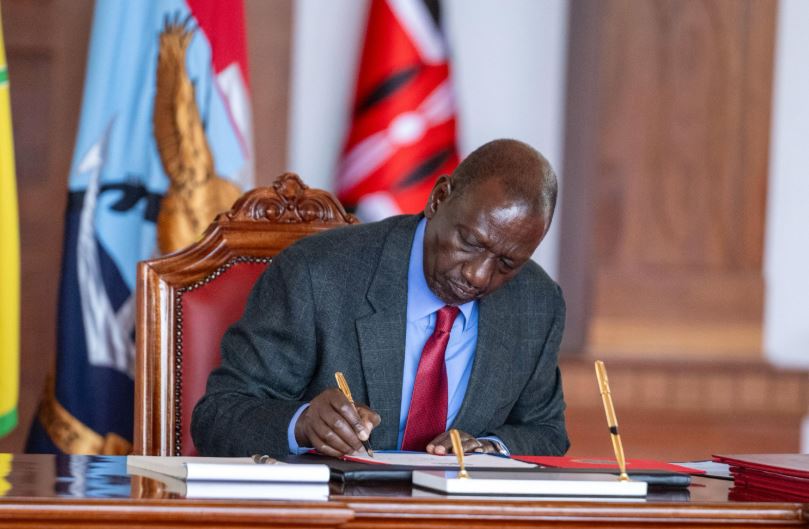
 President William Ruto signed the Central Bank of Kenya (Amendment) Bill, 2026, into law. The reforms seek to strengthen the Central Bank of Kenya’s oversight of the financial sector, improve the way it carries out monetary policy, and boost the country’s readiness to respond to financial crises.
The new law creates a separate legal basis for the Central Bank’s regular monetary policy operations and its Emergency Liquidity Assistance (ELA). It also limits emergency support to banks that satisfy strict requirements related to solvency, viability, and systemic risk.
“Assented the Central Bank of Kenya (Amendment) Bill, 2026, ushering in sweeping reforms aimed at strengthening the CBK’s capacity to safeguard financial stability, improve banking oversight, and modernize the country’s monetary policy framework,” Ruto said.
President William Ruto said the reforms will help Kenya respond more effectively to financial crises while protecting taxpayers and the banking sector.
He said, “The new law introduces a distinct legal framework separating the Central Bank’s routine monetary policy operations from Emergency Liquidity Assistance (ELA). The move will improve Kenya’s preparedness to respond to financial crises while protecting taxpayers and the banking sector.”
Ruto added that the legislation strengthens financial system stability and sound banking regulation as secondary objectives for the Central Bank, while keeping price stability as its primary mandate. He said the law also requires Deputy Governor nominees to undergo vetting and receive approval from the National Assembly before appointment, which he said will reinforce parliamentary oversight.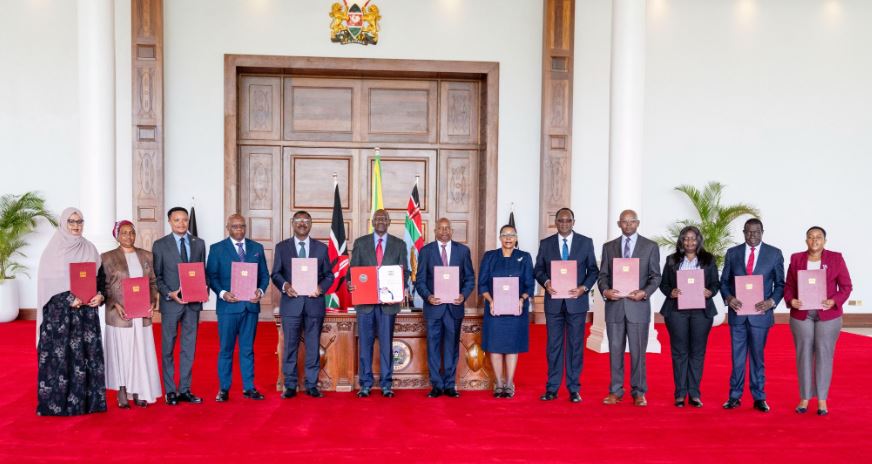
The president also said the Central Bank of Kenya (Amendment) law updates several provisions by replacing references to the defunct Deposit Protection Fund Board with the Kenya Deposit Insurance Corporation. He said the change brings the Act in line with the current deposit protection framework.
He added that the law also strengthens legal clarity on the Central Bank’s authority to trade in gold and other precious metals as part of reserve management. Ruto said the move will support growth in Kenya’s mining sector and align Kenya with practices used in Tanzania, Ghana, and South Africa.
Ruto further signed the Parliamentary Pensions (Amendment) Bill, 2023. He said the bill aligns the parliamentary pension framework with the Constitution and extends benefits to members of both the National Assembly and the Senate.
The legislation updates the Parliamentary Pensions Act of 1983, which became outdated after the 2010 Constitution created a bicameral Parliament. The new law formally recognises both the National Assembly and the Senate in the administration of parliamentary pensions and ensures that senators receive benefits under the same framework as MPs.
The legislation also redefines the term “child” to mean a person below 18 years, up from 16 years, to align with the Constitution.
In addition, the amended Act reconstitutes the Parliamentary Pensions Management Committee and the Appeals Committee to include representation from both Houses, reflecting Kenya’s bicameral structure.
To protect the public service pension policy, the law retains gratuity payments for legislators only if they serve for less than five years.
The post What Ruto’s New CBK Law Means for Banks, Taxpayers and Financial Stability appeared first on Bossnana.


